If you’re an MSP leader right now, you’re probably feeling it.
Not the hype.
The pressure.
Your clients are asking about AI. Your team is experimenting with it. Your competitors are quietly building capability. And somewhere in the middle of all that, you’re trying to figure out the most important question:
Where do we actually start?
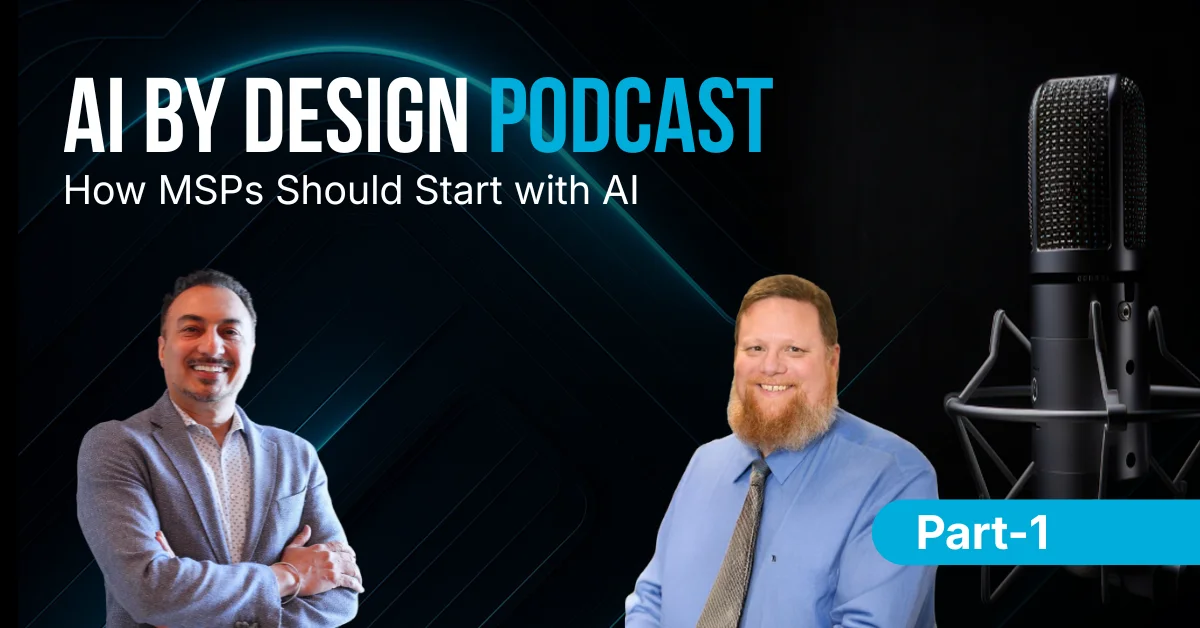
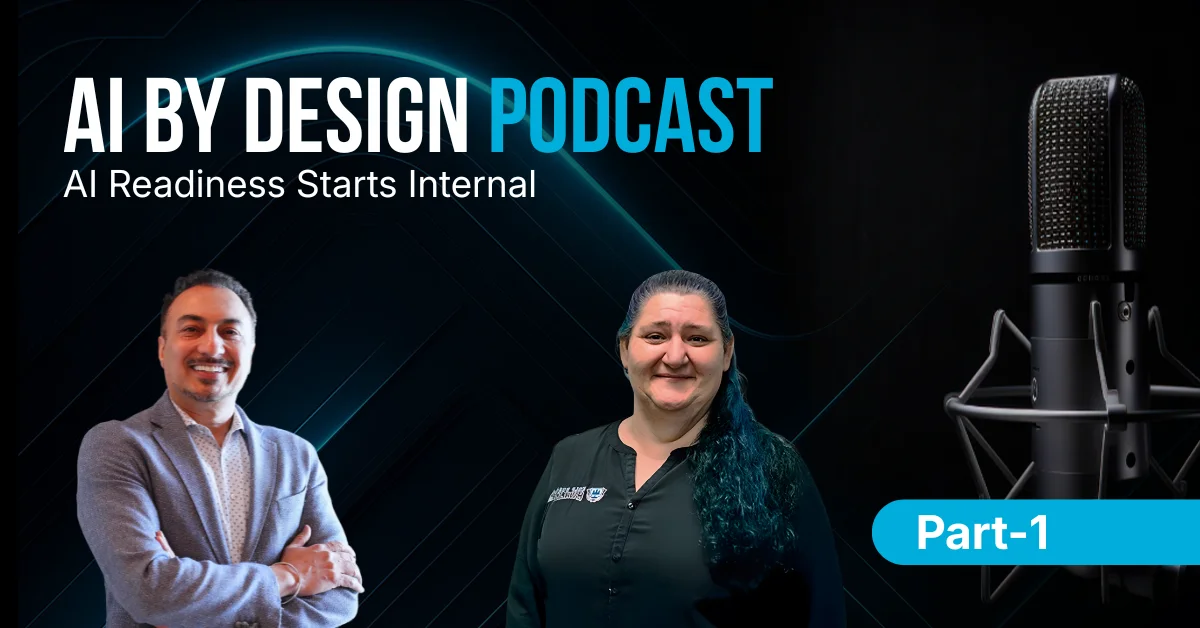
That’s exactly why I recorded this episode of AI By Design with Kim Brys, Operations Director at Help Desk Cavalry.
Kim’s MSP is based in the Kitsap Peninsula. They’ve been operating for 13 years, supporting small to mid-sized businesses. What I loved about this conversation is how grounded, honest, and operational it was.
This wasn’t “AI theory.”
This was real MSP execution.
And her message to other MSPs was one I want every operator to hear:
Start internal. Fix your inputs. Document reality.
The win isn’t flash. The win is time, clarity, and calmer teams.
Let me walk you through what we covered: because it’s a blueprint.
Kim’s MSP Story: 13 Years, One Clear Mission
I opened the episode by asking Kim to share her role and her company story.
Help Desk Cavalry is a managed service provider supporting SMBs in their region, with one core purpose:
Eliminate technology issues so clients can focus on what they’re actually in business to do.
Kim’s role is Operations Director, and she oversees the entire team, but what stood out is how she thinks about operations.
She’s not just “managing tickets.”
She’s focused on bridging gaps between teams, improving handoffs, creating smoother execution, and removing friction.
And that mindset is exactly what makes AI adoption work inside an MSP.
The First AI Move They Made Was Not Marketing… It Was Documentation
Here’s the part that matters most.
When Kim’s team started their AI journey, they didn’t start with AI chatbots.
They didn’t start with “selling AI.”
They didn’t start with a shiny tool.
They started with the most unsexy but most powerful foundation in any MSP:
Documentation.
Kim said something that every MSP leader knows is true:
Most documentation dies the moment it’s written.
It becomes stale. It doesn’t scale. Nobody updates it. Nobody trusts it.
So, Help Desk Cavalry decided:
Let’s use AI to make documentation not just clean but clear, scalable, and future-proof.
And from there, they expanded their AI work step-by-step:
- Documentation
- Marketing
- Ticketing automation
Kim described it perfectly:
“We’re slowly taking bites out of it… so we can lock it in and make it repeatable.”
That’s real operational maturity.
The AI Accelerator Lesson That Changed Everything: How to Talk to AI
Kim also joined our first AI Accelerator cohort in October, and I asked her what she took back from the program.
Her answer was powerful:
The biggest win was learning how to use AI better.
Not tools.
Not prompts.
How to ask purposeful questions.
Because if you don’t know what you’re doing early on, AI can take you everywhere.
And the output becomes chaos.
Kim explained it simply:
“This is what I want. Don’t go crazy.”
That’s what guardrails look like.
And I expanded on it in the episode because this is one of the most misunderstood things in the MSP space:
AI hallucination is real.
If you don’t put structure around your prompt, you will get inconsistent output.
That’s why we teach the grid prompting framework:
- Goal
- Role
- Return format
- Instructions
- Tailored context
When you do that, your AI output becomes dramatically more reliable: especially for documentation, SOPs, and internal service delivery.
The Real MSP Productivity Wins They Saw (In the First Few Months)
Then I asked Kim to double-click on the real outcomes.
Where did AI improve quality, speed, productivity, and time saved?
She said something I loved:
They saw results within the first couple of months.
And it started with something most MSPs overlook:
Communication.
Their quality improved because their communication improved.
Not just:
“This is done. Have a great day.”
But meaningful conversations with clients.
Then came ticketing automation.
Kim shared three clear wins:
- Tickets were identified faster
- Priorities were clearer
- Service coordination became easier
And here’s a big one for MSP leaders:
AI reduced stress for technicians.
Kim made a point that I think every MSP owner should print and put on the wall:
“Technicians are a lot of the time introverts.”
So, her team created standard communication templates that technicians could grab quickly: helping them communicate clearly without the mental burden of writing every message from scratch.
That’s not just efficiency.
That’s culture.
That’s retention.
That’s sustainable service delivery.
The Market Signal MSPs Can’t Ignore: Clients Are Asking for AI
Then I asked Kim the question every MSP needs to hear:
Are your clients asking about AI?
Her answer was immediate:
Yes. Absolutely. All the time.
Clients want:
- More efficiency
- Better ROI
- More capacity
- Automation
- Faster workflows
And one of the most common questions she’s hearing is:
“We know AI exists… but what would it do for us?”
That is the opportunity.
Because clients aren’t asking MSPs for “AI.”
They’re asking for outcomes.
AI is just the layer that makes those outcomes possible.
Kim also shared that her team is recommending simple AI programs and tools (like AI receptionist use cases) to help clients start building confidence.
And she said something important:
Clients still have fear.
They don’t know what they’re doing.
But when they see their MSP doing it, it reduces that fear.
That’s how trust compounds.
The Sherpa Advantage: Why MSPs Must Become Customer Zero
This is where I leaned into something I strongly believe:
The MSPs who win will be customer zero first.
When you implement AI internally, you earn the right to guide clients.
That’s how you become the Sherpa.
And I shared a real example that honestly shocked me.
A business reached out to me because they had a desperate need for AI help.
They already had an MSP.
But their MSP said:
“We don’t do AI.”
And the customer’s need wasn’t complicated.
They needed basics:
- AI awareness training (like security awareness training)
- AI governance
- AI use policy
- Centralized corporate AI usage
- Guardrails so employees aren’t using random ChatGPT accounts
And the MSP had nothing.
This is the moment MSP leaders need to understand:
AI is not a nice-to-have anymore.
It’s a must-have.
Because if you don’t help your clients, someone else will.
And when a competitor enters with AI capability, they won’t stop at AI.
They’ll replace you.
Kim’s Message to MSPs Was Perfect (And I Want You to Remember It)
Before we wrapped, Kim gave the message she wanted other MSPs to take away:
Start internal. Fix your inputs. Document reality before you do anything client-facing.
The real win isn’t flash. It’s time, clarity, and calmer teams.
That is one of the best MSP AI strategy summaries I’ve heard.
Because most MSPs want to “sell AI.”
But they haven’t operationalized it internally.
And if your internal service delivery is messy, AI won’t fix it.
AI will scale the mess.
My Framework: The 3-Step AI Path for MSPs
I closed the episode with a simple roadmap MSPs can execute:
1) Be Customer Zero
Start internally.
Experiment inside your own MSP.
2) Find Your Biggest Constraint
In every department: helpdesk, dispatch, finance, HR, marketing.
Ask:
- Where are we losing time?
- Where are we repeating work?
- Where is stress highest?
3) Pick Your Battles
If you have 100 use cases, don’t try to solve 100.
Start with:
Low effort. High impact.
Create a quick win.
Then share that win with clients in story format.
Because business is business.
Every company has:
- HR
- Finance
- Customer service
- Operations
So, your internal wins translate to client wins.
Final Thought for MSP Leaders
If you take one thing from this episode, let it be this:
AI is not software.
AI is a skill.
And skills can be built.
The MSPs who win in the next 24 months will not be the ones with the most AI tools.
They’ll be the ones who build:
- capability
- repeatability
- governance
- internal proof
Then they’ll become the trusted AI advisor their clients are already looking for.
The quote that I can takeaway, that resonates a lot from this is:
“Start internal. Fix your inputs. Document reality.”
That’s how you build an AI practice that doesn’t collapse under its own weight.
One Action You Can Take This Week
Run an internal AI quick-win assessment.
Ask:
- What’s the biggest constraint in our MSP right now?
- Can AI reduce time, improve clarity, or lower stress?
- What’s the smallest implementation that creates a measurable win?
Then start.
Progress over perfection.