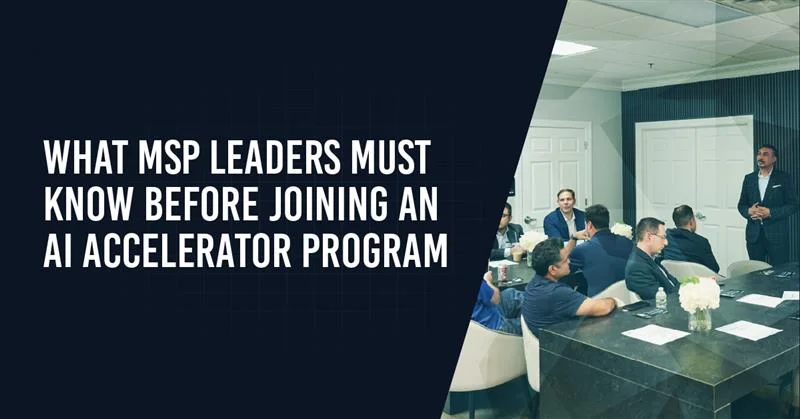
By the time MSP leaders walked into the January AI Accelerator, most were not short on ideas. They had seen the demos, sat through vendor briefings, and launched early AI initiatives. Yet progress felt slow and fragmented. The missing piece was not ambition or access to tools. It was an MSP AI execution clarity.
This is the story of what changed inside the room. Not theory. Not hype. But how motivated MSP owners and leadership teams moved from scattered AI activity to focused execution and decision confidence.
The Real Problem Leaders Walked in With
AI conversations were already active inside most MSPs. Leadership teams had initiatives on board and pilots in motion. Despite that activity, momentum felt stalled.
Why AI Felt Stuck for Motivated MSP Leaders
The issue was not a lack of ideas. It was execution of confusion.
- Too many initiatives competing for attention
- No agreement on what mattered now versus later
- Teams moving without clear leadership direction
The leaders were busy but not aligned. Without execution clarity, even strong AI intent stalled.
Why More AI Tools Were Not Going to Fix It
Before January, most attendees had access to plenty of AI tools. That access did not translate into progress.
Tool Awareness Outpaced Decision Confidence
Vendor demos and internal meetings increased exposure, not clarity.
- Each tool promised impact
- Every option felt urgent
- Decisions became harder, not easier
Without clear leadership decisions, tools multiplied uncertainty instead of reducing it.
What Changed First: Decisions Got Sharper
Execution did not begin with building anything new. It began with deciding what deserved attention. Many leaders arrived with long lists of AI ideas, pilots, and experiments already in motion. What they lacked was a clear sense of priority.
The first shift inside the room was focused. Leaders were pushed to narrow aggressively, not because options were limited, but because attention was. Momentum started when leaders accepted that clarity comes from choosing fewer things and committing them fully.
Leadership Alignment Created Momentum
Early work inside the Accelerator forced alignment across leadership teams. Instead of debating possibilities, leaders clarified intent.
They aligned on:
- A small number of priorities that truly mattered now
- Clear constraints around capacity, timing, and readiness
- Real trade offs that had been avoided in the past
Once fewer decisions were in play, teams stopped spinning. Momentum followed because direction was no longer ambiguous.
The Decisions Leaders Had Been Quietly Avoiding
Some of the most meaningful progress came from decisions that had been delayed, not because they were complex, but because they were uncomfortable. These were the conversations leaders knew they needed to have, but kept postponing.
Peer challenge created the space to surface those avoidance patterns. Hearing how other MSP leaders were handling similar trade offs made indecision harder to justify.
Hard Calls That Unlocked Clarity
Leaders finally addressed questions they had circled for months.
They made decisions around:
- Which customers were realistically in scope for AI initiatives
- Whether internal teams were actually ready to support change
- Who owned decisions and follow through once work left the room
Clarity did not come from adding more ideas. It came from deciding what not to pursue and removing noise from the system.
How Peer Context Accelerated Execution Clarity
Alignment happened faster because the conversation was grounded in real MSP experience. There was no abstract advice and no generic best practices. Every discussion was anchored in lived reality.
Peer context removed the pressure to perform and replaced it with practical judgment. Leaders could pressure test decisions without being told what the right answer was.
Why Peer Led Execution Works
Real MSP experience changed the tone of decision making.
- Shared context reduced blind spots leaders did not realize they had
- Leaders tested decisions safely before committing publicly
- No one prescribed answers or forced consensus
This environment created confidence without ego. Leaders left trusting their decisions because they had been challenged, not validated.
What Was Actually Built Once the Fog Lifted
Only after clarity emerged did building begin. This order mattered. Instead of brainstorming assets first, leaders built only what their decisions required.
Because scope was realistic, execution became practical.
Assets That Followed Decisions
Leaders left with outcomes their teams could act on immediately, including:
- Focused roadmaps aligned to real capacity and timing
- Clearly scoped pilots with defined ownership
- Practical operating models that fit how their MSP actually runs
Nothing was theoretical. Everything was shaped by the decisions made earlier in the room.
Why These Assets Did Not Die After the Session
Skepticism around post event follow through is fair. Shelfware is common. What made the difference here was that execution was considered before leaders left the room.
Ownership was not an afterthought. It was designed early.
Operational Follow Through Was Designed Early
Leaders clarified expectations before handing work off.
- Accountability was assigned before execution began
- Timelines were realistic, not aspirational
- Constraints were acknowledged and respected
Because teams received clear direction instead of vague ambition, work continued instead of stalling.
What This Revealed About True AI Readiness
Readiness did not show up as excitement or confidence with tools. It showed up in behavior. Some leaders adapted quickly. Others struggled.
The difference was not technical skill. It was decision maturity.
Behavior Revealed Readiness
The most prepared leaders consistently:
- Asked sharper, more focused questions
- Made decisions faster without overanalyzing
- Accepted constraints instead of fighting them
AI readiness correlated with decision quality, not enthusiasm.
Who This Type of Room Works For and Who It Does Not
This environment was intentionally demanding. It rewarded clarity and punished avoidance. As a result, not every leadership style thrived equally.
Leaders Who Thrive
- Those seeking clarity rather than validation
- Those willing to be challenged by peers
- Those focused on execution, not optics
Leaders Who Struggle
- Those looking for shortcuts or templates
- Those uncomfortable making trade offs
- Those expecting answers instead of accountability
The room made these differences visible quickly.
What January Proved Before April Even Began
January was not an endpoint. It was a signal of what happens when leaders arrive prepared to decide, not just discuss.
The experience clarified what makes execution possible.
What Became Obvious Going Forward
Execution improves when leaders arrive:
- Aligned internally before the session
- Prepared to contribute, not consume
- Willing to be challenged and changed
That insight shapes what comes next and who will benefit most from it.
Conclusion: If You Missed January, April Is Your Window
The January AI Accelerator proved something important. AI execution does not accelerate because of tools. It accelerates because leaders gain clarity, make decisions, and commit to them.
If you were unable to join the January session, the April AI Accelerator: Leaders is your opportunity to step into that same environment.
This in person experience is designed to help MSP leaders cut through noise, align leadership teams, and move from AI intent to execution clarity.
The next AI Accelerator: Leaders in person session takes place on April 13th and 14th, 2026, in Jersey City, New Jersey.
If AI initiatives are active inside your MSP but execution feels fragmented, this is where clarity begins.
Register for the AI Accelerator: Leaders and move from stalled ideas to confident execution.
FAQs: MSP AI Execution and the AI Accelerator
Q: What is MSP AI execution clarity
A: It is the ability for leadership teams to make focused AI decisions and move initiatives forward without confusion or rework.
Q: What do leaders actually build in an AI Accelerator
A: Leaders build decision ready roadmaps, scoped pilots, and operating models that teams can execute immediately.
Q: Is the AI Accelerator technical or strategic
A: It is leadership focused and strategic, with execution as the outcome.
Q: Who should attend the AI Accelerator: Leaders
A: MSP owners and executives responsible for AI decisions and business outcomes.
Q: What happens after the AI Accelerator ends
A: Leaders leave with clarity, ownership, and next steps that continue execution beyond the session.