What Changes When AI Becomes a Customer Conversation
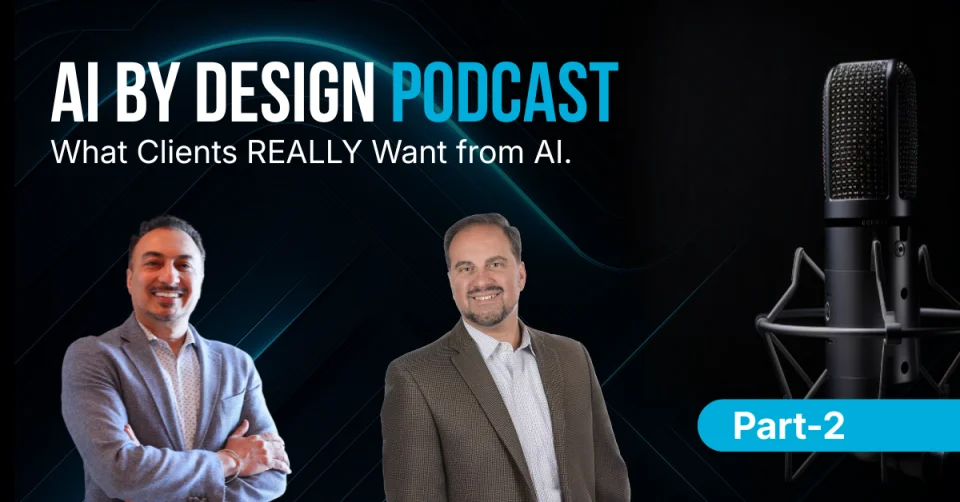
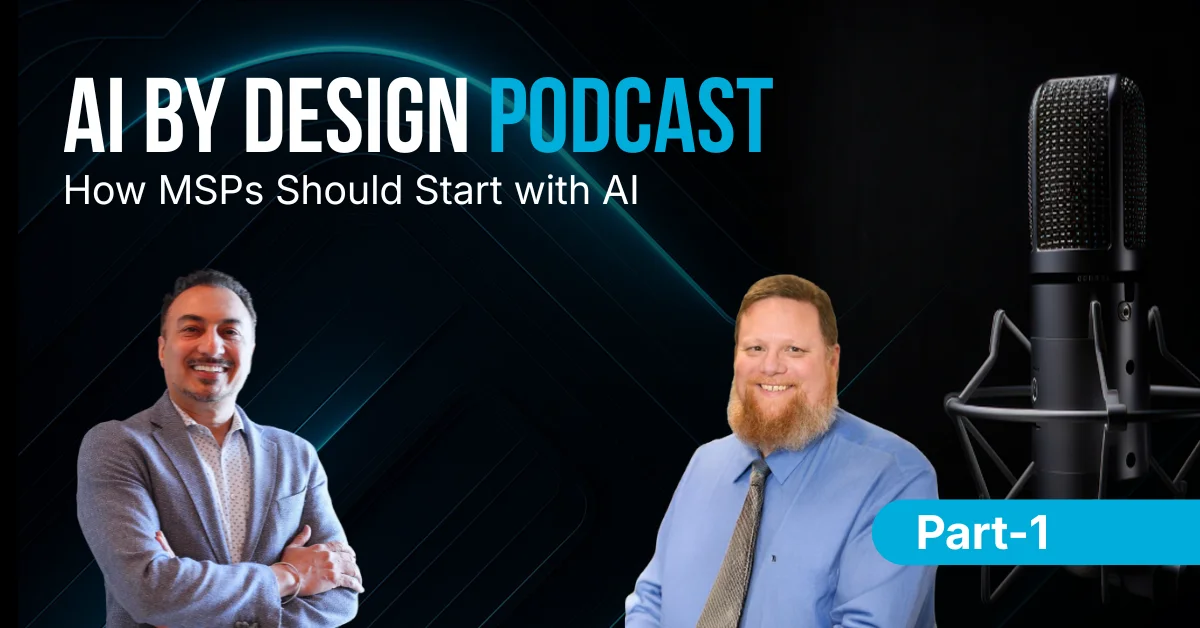
In the first part of my conversation with Keith Schoolcraft, we spent time on how MSPs can bring AI to market in a structured way. That discussion was focused on strategy. It was about how to think about AI, how to position it, and how to begin those conversations.
This part is different.
Once those conversations start happening with customers, you see a shift very quickly. AI is no longer sitting in the category of something interesting to explore. It is already being used inside the business. Teams are testing it, individuals are experimenting, and the questions have moved from curiosity to execution.
That is where things start to get real.
What Customers Are Actually Asking About AI Today
One of the first things I wanted to understand from Keith was simple. What are customers actually asking right now?
Not in theory. In real conversations.
The answer was consistent.
Training comes up almost every time. But not in the way most people expect. Customers are not asking how to use a tool. They are trying to understand how AI fits into the way they work. How it helps them think differently, make decisions faster, and improve how work gets done.
That is where the real gap is.
At the same time, most customers are not looking to add more tools. In many cases, they are already using platforms like Microsoft Copilot. The conversation is not about expanding the stack. It is about getting more value from what already exists.
How do we connect information across systems?
How do we surface insights faster?
How do we make better decisions with the data we already have?
That is where they need help.
Why Businesses Feel Stuck Even When They Want AI
What stood out in my conversation with Keith is that customers are not resistant to AI. They are unsure where to begin.
They understand that it matters. They are experimenting in small ways. But there is no clear direction guiding those efforts.
Without that direction, it becomes easy to stay stuck in experimentation without making real progress.
This is where a consultative approach becomes important.
Before anything gets implemented, there needs to be clarity on how the business operates today. Where is time being lost? Where are inefficiencies showing up? What are the real priorities?
Once that is clear, it becomes much easier to identify where AI can actually help. Without that clarity, it turns into adding technology without solving anything meaningful.
How AI Adoption Moves from Assessment to Execution
There is a pattern that continues to show up.
First, understand where you are today.
Then define where you want to go.
Then determine how to get there.
It sounds simple, but it is often skipped.
The biggest mistake is starting with the technology. The better approach is to start with the problem.
Where is the business struggling?
What is taking too much time?
Where are resources being stretched?
When you start there, AI becomes much easier to apply. It becomes less about a tool and more about improving how work gets done.
This is where MSPs have a real role. Not just in advising, but in helping bring those changes into execution.
Where AI Is Delivering Immediate Business Impact
When Keith and I discussed impact, a few areas came up right away.
Identity and verification is one of them. With deepfakes and spoofing becoming more common, businesses need to be confident that people are who they say they are. This applies to both customers and internal users.
Data protection is another area that comes up in almost every conversation. Businesses are using AI tools, but they are also trying to understand what that means for their data. Where it goes, how it is used, and what risks exist.
Then there is workflow improvement.
Most businesses already know where they are inefficient. The challenge is figuring out how to fix it. AI can help simplify workflows, reduce manual effort, and free up time. But it only works when it is applied with the right understanding of the business.
How Customers Are Thinking About AI Agents
AI agents came up as expected, but what stood out is how customers think about them.
They are not asking how to build agents. They are asking how to solve problems.
That difference matters.
It shifts the conversation away from the technology and back to outcomes. Most customers do not want to build something new. They want something that works. Something that improves how their business operates today.
This is where MSPs can step in with real value. Not by explaining how agents work, but by delivering solutions that improve operations in a practical way.
Why Governance Is Becoming Critical
Another topic that came up consistently was governance.
There is a lot of messaging in the market encouraging businesses to move fast and experiment. That approach has limits in a real business environment.
Without structure, AI can introduce risk just as quickly as it creates value.
Governance is about clarity. What tools are approved. What data can be used. How AI should be applied.
For MSPs, this is not new. Security and compliance have always been part of the role. The difference now is that those same principles need to extend into AI usage.
The Growing Challenge of Shadow AI
Something else that is already happening across environments is shadow AI.
People are using AI tools on their own. They are downloading applications, testing things, and trying to be more productive. This is happening outside any formal structure.
The challenge is that when something goes wrong, the expectation remains the same. The MSP is still expected to fix it.
That is where the risk becomes real.
Taking a proactive approach by setting guidelines, educating users, and creating awareness early makes a significant difference. Without that, managing AI becomes reactive instead of controlled.
The Simplest Way to Start AI Adoption
With everything around AI, it is easy to assume that getting started requires a complex plan.
It does not.
One of the most practical suggestions from my conversation with Keith was simple. Start with an acceptable use policy.
Define what is allowed.
Set clear boundaries.
Give people a starting point.
It does not need to be perfect. It needs to exist. From there, it can evolve as the organization learns more.
What This Means for MSPs Going Forward
What is becoming clear is that AI is no longer something teams are just experimenting with.
Customers are asking more implementation-driven questions. They want to understand how to deploy AI, what a good structure looks like, and how to make it work inside their business.
For MSPs, this creates a real opportunity.
It is no longer just about delivering services. It is about helping customers turn AI into something that works in practice.
Because AI is not just another tool. It is becoming part of how businesses operate.
The MSPs who can guide that shift with clarity and structure will be the ones leading what comes next.