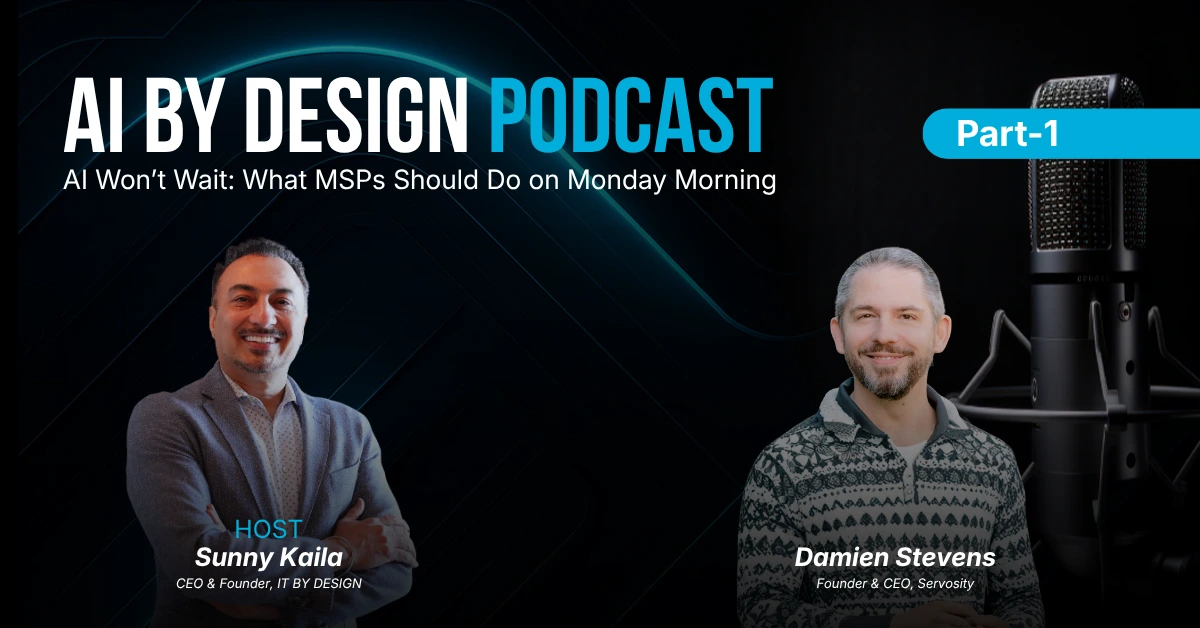
Some of the most grounded perspectives on business come from people who built everything from nothing.
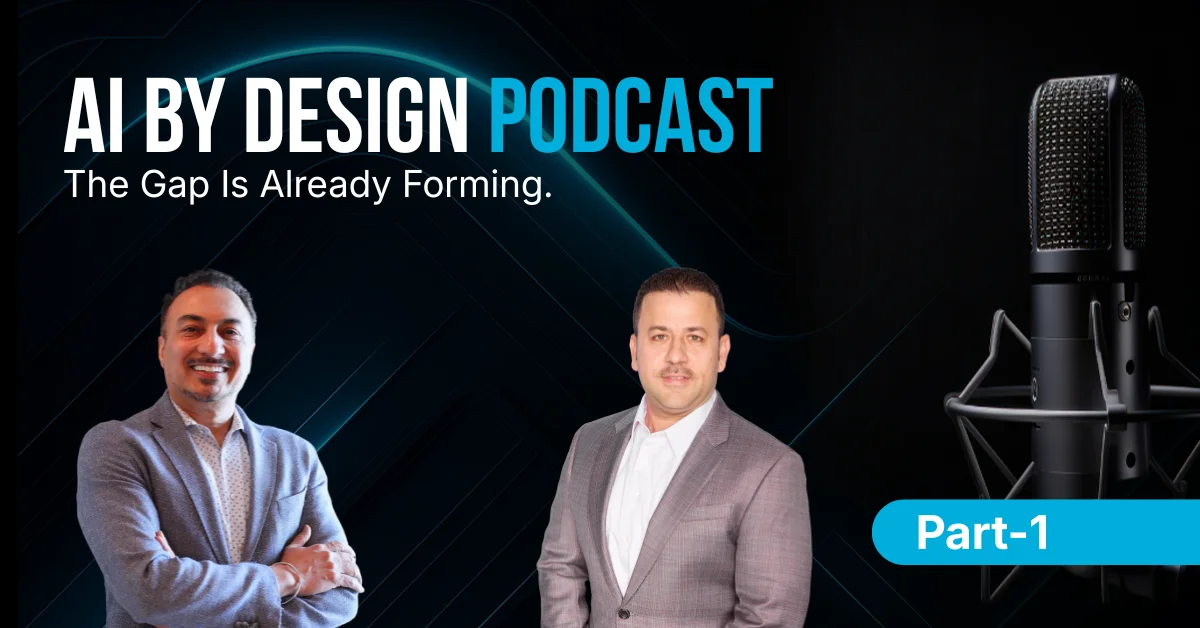
Ahmed Mahmood, founder and CEO of Ocean Solutions, is one of those people.
Originally from Iraq, Ahmed ran a small computer business as a college student when the US involvement in Iraq changed everything. He worked with the US Army helping rebuild computers for schools and hospitals. That work made him visible to Al-Qaeda and forced him to flee. He spent five years in Syria before arriving in the United States in 2009 with his wife, his child, $2,164 in his pocket, and thirty Microsoft certifications.
He did not have citizenship. He could not work with government contractors where his expertise would have applied. So he did what every resilient entrepreneur does. He found another way.
He spent nine years inside an MSP, quadrupled its size, and in 2019 launched Ocean Solutions out of the DC metro area. Today the company manages approximately 6,000 users, employs around 20 staff members, and has earned recognition on the MSP 501, NextGen, MSP 500, Pioneer 250, Fast Growth 150, and Tech Elite 250 lists from CRN.
That is not a trajectory built on luck. It is built on the resilience muscle Ahmed developed by going through adversity rather than around it.
The Gap Between Where SMBs Are and Where They Need to Be
Ahmed brings a perspective to the AI conversation that most consultants cannot. He is not theorizing about what is possible. He is inside client businesses every day watching it play out.
When I asked him about the biggest gap he sees between where SMBs are today and where they need to be, he said something that stopped me.
We are fenced by our own imagination of what is possible.
Because we were not born with this technology surrounding us, we have built virtual limitations in our minds about what AI can do and how it can be operationalized. The adults in the room, the business owners, the department heads, the operators, are unconsciously capping AI’s potential with the mental models they built in a pre-AI world.
Ahmed shared that he had been speaking at a gifted school program that morning about developing an AI curriculum for high school students. His point was direct. Young people whose imaginations have not yet been shaped by what has always been possible will take AI further and faster than any of us can on our own.
That insight reframes the SMB challenge entirely. The problem is not access to tools. It is the mental framework leaders bring to those tools.
AI for SMBs Is Not a Growth Opportunity. It Is a Survival Game.
Ahmed was unambiguous about this and it is worth sitting with.
Most conversations in the MSP channel frame AI as a TAM expansion or a new revenue stream. Ahmed rejects that framing entirely.
If you get on board you get all the benefits. If you do not get on board you will be on the track when the train comes through.
The businesses that adopt AI early are already absorbing inflation through automation and efficiency. Ocean Solutions has not raised prices recently because automation is doing the work that would otherwise require headcount or margin compression. The MSPs and SMBs that are not moving are going to face a competitive pricing disadvantage that compounds over time.
By the time a late adopter reaches stage A their competitor is already at stage C. That gap does not close on its own.
Shadow AI Is Already Inside Your Clients’ Businesses
One of the most important warnings Ahmed raised was around shadow AI.
Business leaders think their teams are not using AI. They are wrong.
That person creating polished presentations with unusual speed. Those marketing deliverables that appear faster than they should. AI is already inside your clients’ operations. The question is not whether it is being used. It is whether it is being controlled.
Ahmed’s team deploys a DLP product specifically designed to surface what AI tools are being used across client environments. The visibility that creates is eye opening for most business owners.
The risk is real. When sensitive data enters a free or improperly configured AI platform it does not come back. There is no undo. As Ahmed put it simply and directly.
Once AI has it you cannot un-teach it.
The guidance he offers clients is equally direct. Adopt an AI platform under the company umbrella. Select champions in key departments. Deploy with education. Do not let it grow outside of your fence.
And for the CFOs in the room. Check the credit card statements. You will find individual AI subscriptions that nobody approved. Even paid accounts in many cases are training the models by default if not configured correctly by someone who knows what they are doing.
The One Question Every SMB Should Ask Their MSP Right Now
I asked Ahmed one practical question before we moved into the second part of our conversation.
If an SMB leader wants to evaluate whether their MSP is the right guide for this AI journey, what is the single most important question they should ask?
His answer was immediate.
Ask your MSP if they can do an AI maturity assessment for you.
Not a product demo. Not a sales pitch. A real diagnostic that tells you where you are in your AI journey today and what a credible path forward looks like.
If the MSP can deliver that assessment with depth and honesty it signals real capability. It gives the SMB a compass. It tells them where to start, what to fix, and how to move.
If the MSP cannot do it that answer is equally valuable. Because waiting for your current provider to catch up while your competitor is already moving is not a neutral position. It is a compounding disadvantage.
Ocean Solutions offers both free and deeper paid assessments for exactly this reason. Start by knowing where you are. You cannot find direction from a position you have not mapped.
What This Means for MSPs
Ahmed’s perspective sharpens something I believe deeply.
The MSPs who win in the AI era are not the ones with the most certifications or the longest client lists. They are the ones who have done the internal work first. Who have developed real AI capability. Who can walk into a client conversation with an assessment framework, a roadmap, and the credibility that comes from having lived the journey themselves.
That is what Customer Zero looks like. And that is the standard every MSP should be building toward.
The relationship between MSPs and SMBs is already shifting. Part 2 of this conversation goes deep into exactly how.