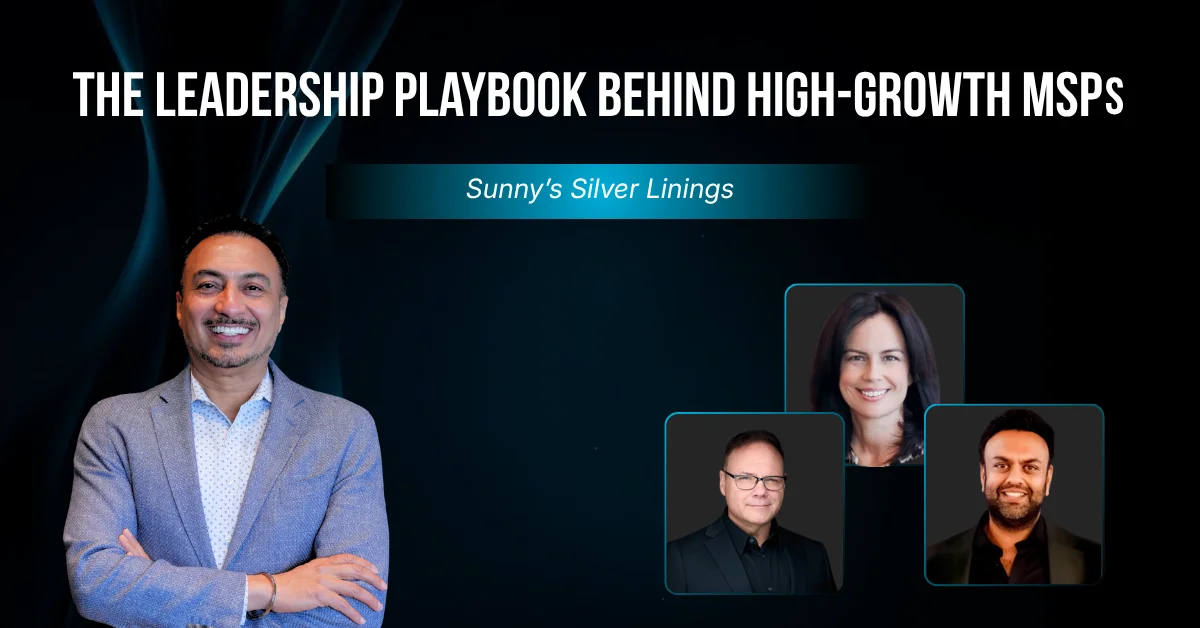
I have been in a lot of rooms with MSP leaders over the years.
Some are chasing the next shiny tool. Some are stacking books on a shelf they never open. And a few, a very small few, are quietly building something that lasts.
The difference is not talent. It is not timing. It is not capital.
It is how they think.
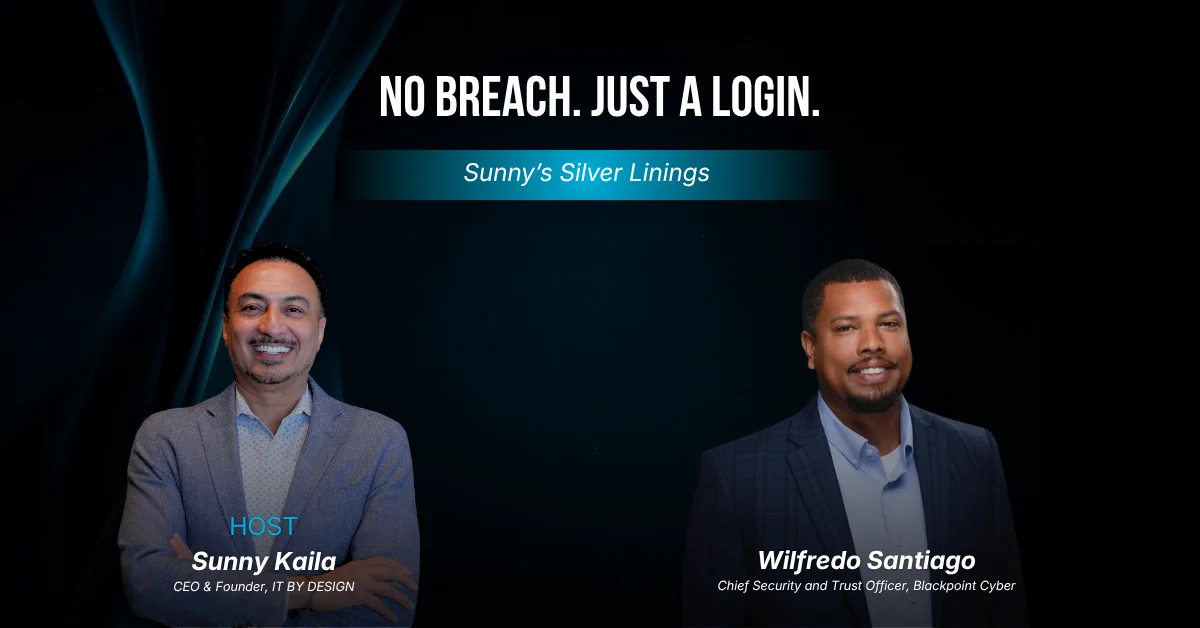
Recent conversations reminded me of that. Different leaders. And distinct sets of lessons. They said things that stayed with me long after the recording stopped.
Here is what I took away.
Part One: Plan More. Learn Constantly. Repeat.
The first conversation started with a simple question: what is the greatest lesson you have learned that you would share with someone just starting out?
The answer was not what most people expect.
Plan more than you think you need to.
What I often see in startup businesses is not enough planning. Not the kind of planning you do once and file away, but the kind where you sit down and seriously map what year one looks like, what year three looks like, where you want to be in year five. If you start with a plan, you are more likely to actually get there.
I have seen this up close. When leaders adopt the practice of taking thinking time, protecting that space to think and plan, everything changes. I have heard it called a thinking chair, a Monday morning ritual, whatever the practice looks like. The point is the same: purposeful pauses produce results.
The second lesson was learning. Not passive, surface-level learning. The kind that compounds.
When I studied the most successful entrepreneurs I know, the ones who really scaled, they all shared one habit. They spent time learning. Reading books. Watching content. Listening to conversations like this one. We are living in an era where it has never been easier to learn, and yet most people do not take advantage of it.
That is where I connected deeply. Learning is at the root of why I have grown. Not just professionally. As a person. And when you grow, everyone around you grows too.
The Shiny Toy Problem
The second part of that same conversation went somewhere I did not expect.
When asked about the most common mistake MSP leaders make, the answer was not about pricing, or hiring, or even technology. It was about distraction dressed up as ambition.
In peer groups, there is a phrase for it: shiny toy syndrome.
Someone goes to a conference, hears an idea, gets fired up, and comes back ready to start something new. Before they have finished what they already started. Before they have squeezed every ounce of value out of what is already working.
The better question is rarely asked: how can we make what we are already doing better?
Even a one percent improvement, iterated consistently across your systems and tools and processes, compounds into something significant. Two percent. Three percent. Over a year, that adds up.
There was a story that landed hard. A peer group member who would hear a book mentioned and immediately order it on Amazon. His wife sent a photo of his bookshelf: one hundred books. He had never read any of them. He had the best intentions. But intent does not equal outcome.
Visionaries see shiny objects constantly. That is not a flaw. But the ones who scale are self-aware enough to ask: what am I already building? What am I not finishing because something new has my attention?
Collect less. Finish more. Iterate on what is already yours.
Bad Decisions Are Better Than No Decisions
This is something I talk about constantly because I believe it.
I did a session with my team recently. Two lists. Your worst indecision list. Your best bad decisions list.
The insight at the end of that reflection was this: bad decisions are always better than indecision.
When you sit with friction, that anxiety of a choice you are not making, the drag on your business is real and cumulative. It slows the people around you. It signals that waiting is acceptable. That hesitation is safe.
But when you make a decision, even a wrong one, you generate data. You generate learning. That is your research and development. That is where transformation actually happens.
And you can only make bold decisions if you have tolerance for risk, for uncertainty, for the discomfort of betting on something others are not betting on.
The leaders who win are the ones making hard calls that others are afraid to make. If you are doing the things others are not doing, if you are making the decisions others are deferring, you will have more success than anyone around you.
We are in a technology business. Technology is changing faster than it ever has. If you are not changing, you are done.
The Difference Between Perception and Perspective
The second conversation took a different turn.
When I asked for the greatest life lesson, the answer was immediate and precise.
Perception is viewing a situation through your own eyes. Only your eyes. That is where most of us live most of the time.
Perspective is different. It is the ability to step outside yourself and look at the same situation from the other side of the table. To take into account what the other person is seeing, feeling, carrying into the room.
When you can do that, everything changes. You come to conclusions faster. You mediate more effectively. You lead with more accuracy. Relationships deepen on both sides of the table, professional and personal.
This is not a soft skill.
In the MSP business, we are in the business of relationships. Always have been. And the leaders who can see through both lenses, not just their own, are the ones who build trust that actually holds. Who hold rooms differently. Who close more and lose less.
I said it in that conversation and I will say it again here: there is so much gold in that answer. You could build an entire leadership philosophy around just that one shift.
The Reverse Culture Fit Interview
The last idea from that second conversation is the one I have been repeating most since.
Most hiring processes run in one direction. The company interviews the candidate. The company evaluates. The company decides.
What I heard described was something completely different.
After a candidate gets through the initial process and the team feels good about the fit, instead of moving straight to an offer, the candidate is given contact information for people across the company. Not just leadership. A helpdesk person. A network engineer. A project manager. A salesperson. A cross-section of real people at real levels.
And then the candidate is asked to reach out to those people and interview them.
The candidate gets to ask: what is it really like here? What is the culture actually like? Why do you stay?
I have never come across this anywhere else. It is remarkable for two reasons.
First, fit is a two-way street. We often treat it like a one-way street, which is how misalignment happens. Values misalignment is almost always at the root of a bad hire. This process addresses that before day one.
Second, it takes confidence. Real confidence in your culture and your team. If you are willing to let a candidate interview your people at every level, you already know what they are going to hear. That is a signal about the kind of organization you have built.
And the benefit does not stop with the hire. Junior staff get to be part of the interview process. They get experience. They get buy-in. They feel ownership over who joins the team alongside them.
That is how you build a winning team. Not just through who you hire, but through how you hire.
What I Keep Coming Back To
Plan with real intention. Learn without stopping. Audit what you already have before you chase what is new. Make decisions even when they are hard.
Then: see the world from both sides of the table. And build the kind of culture you would be proud to show a stranger.
None of this is complicated. But very few people do it consistently.
That is the gap. And that gap is where the best MSP leaders quietly build their lead.
Follow my newsletter, Sunny’s Silver Linings, for more conversations like this one.