Most leaders I talk to are not short on enthusiasm for AI. They have tools. They have pilots. They have a team member who has been “experimenting.” What they do not have is a result they can point to.
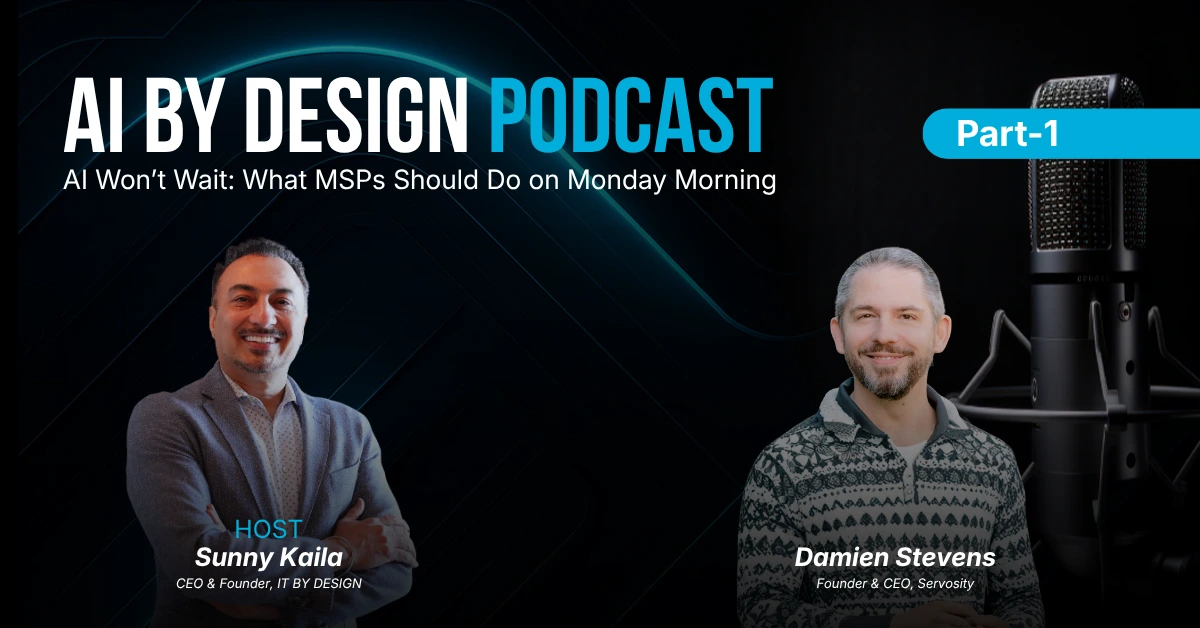
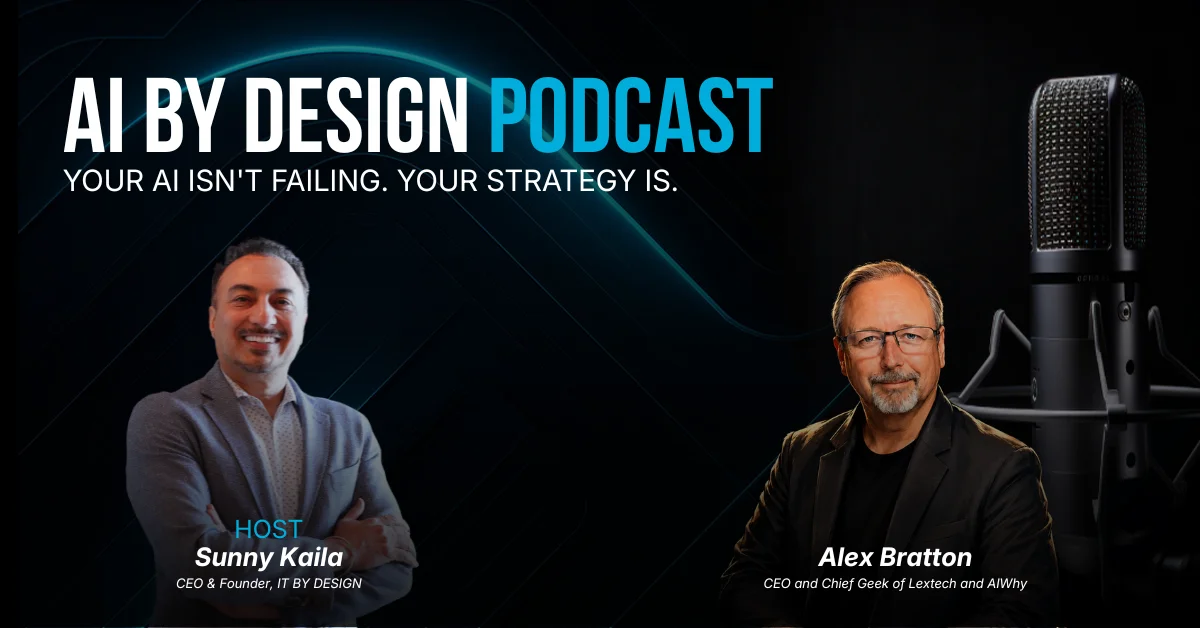
I sat down with Alex Bratton recently on the AI By Design podcast. Alex has founded 12 companies, built a 15-year partnership with Apple, and has been thinking about why technology matters long before AI became the word everyone uses at conferences. The conversation went somewhere I did not expect.
He opened with a number. Ninety-five percent of AI initiatives are failing right now. Not because the technology is bad. Because people are starting with the technology.
That is the problem.
The Trap Nobody Talks About
Here is what happens when a leadership team gets excited about AI. Someone runs a demo. The room gets energized. A pilot gets approved. A tool gets deployed. And six months later, the question nobody wants to answer is: what actually changed?
Alex described it simply. We did not set the right success metrics up front. We did not define which problem we were actually trying to solve.
He shared a real example. A company focused on growing revenue decided to point AI at their sales team. Good instinct. Wrong starting point. They had not yet asked: what is the actual friction in a salesperson’s day?
When they went deeper, they found it. Every rep was spending 10 to 15 minutes doing prospect research before every single call. Across a 20-person team, that was close to 200 hours a month doing nothing but prep work.
Now they had a problem worth solving.
Now they could ask: can AI take that from 15 minutes to 60 seconds? Now they had a target. A metric. A before and an after.
Notice what Alex said next. He did not use the word AI until after they knew what the problem was.
That is the discipline most teams skip.
The Why Underneath the What
Alex has lived through the internet wave, the cloud wave, the mobile wave. Each one moved fast. Each one created noise. Each one had its version of snake oil.
His reset question through all of it has been the same: why does this matter?
Not what can this do. Not how quickly can we implement it. Why does it matter to this person, in this role, doing this work.
That question sounds basic. It is not. It requires you to sit with a salesperson long enough to understand their actual day. It requires you to map friction, not just features. It requires leaders to slow down before they speed up.
The organizations getting ROI from AI are not the ones who moved fastest. They are the ones who got specific first.
Reshaping Work, Not Replacing People
There is a version of the AI conversation I keep pushing back on. The version where the win is that you eliminated headcount.
Alex called it two-times thinking. Cutting two thirds of your team with AI is not ten-times thinking. Ten-times thinking is giving your team superpowers and pointing them at problems you could never have tackled before.
I see this differently than a lot of people do. I am not looking at AI as a cost-cutting tool. I am looking at it as a way to reshape how work gets done.
Here is what that looks like in practice.
Everyone on your team, no matter what their role is, now has access to digital staffers. Not headcount. Not budget. Digital workers who can take on the low-payoff, repeatable, SOP-driven activities that eat time and drain energy.
When those activities move to a digital staffer, the person doing that job does not disappear. They move up. They take on higher-payoff work. They multiply their output without multiplying their hours.
Alex gave a concrete example from his own team. Every time he runs an online workshop, the follow-up used to mean someone manually coordinating across four systems: Zoom, a CRM, Circle, and a content platform. Download the recording. Extract highlights. Tag attendees. Draft a post.
Three hours of work across four systems. Now someone on his team writes two sentences. And it is done.
The Org Chart Is Changing
I talk to MSP owners every week. The question I keep asking is this: are you looking at your future org chart?
Not your current one. Your future one. The one that has both humans and digital staffers in it.
Every team member, at every level, now has the opportunity to build a small pod around their role without a promotion and without a budget request. The only prerequisite is the curiosity to think about what activities they are doing that are low-payoff, repeatable, and delegable.
That thinking is not technical. It is operational. It is leadership.
The organizations that figure this out early are not just going to move faster. They are going to do things their competitors cannot afford to staff for.
That is where AI actually becomes the advantage people keep promising it will be.
What This Means for MSPs
You are already in a trusted advisor role with your clients. You understand their operations. You understand their friction. You are better positioned than almost anyone to ask the why question before you recommend the what.
That is the position to own right now.
The AI wave is not slowing down. But the noise level is not going down either. The leaders who will build real value from this are the ones grounded in a clear why, with outcomes defined before tools are selected, and with a vision for their team that goes beyond cost cutting.
Build the right foundation. The tools will keep changing. The foundation is what holds.