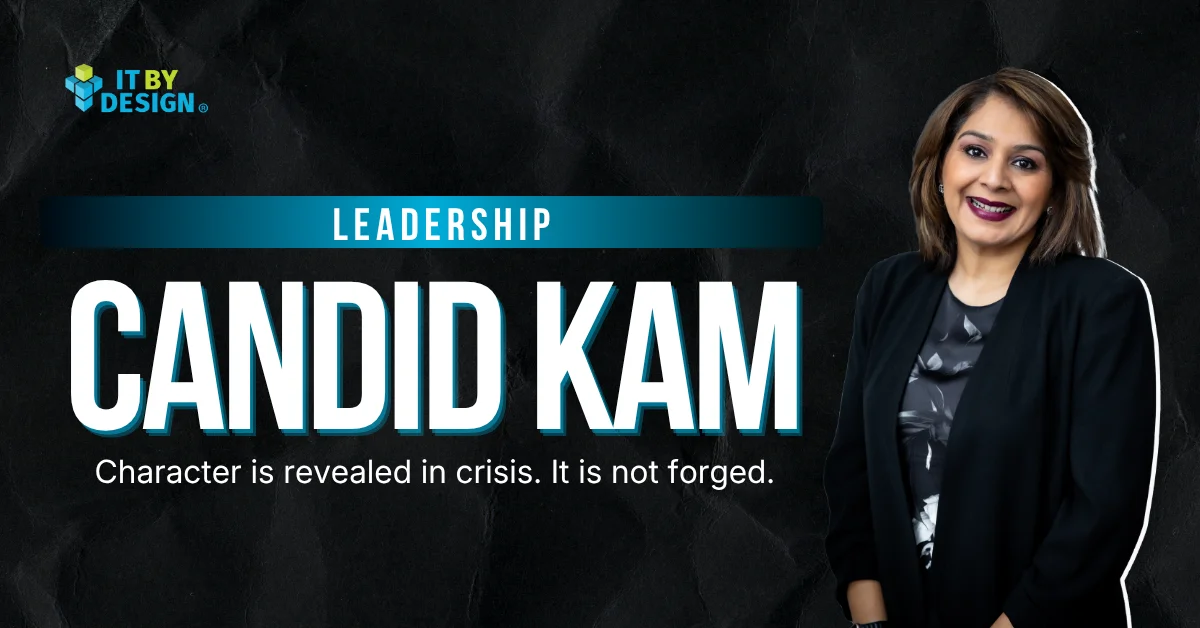
Ed Bastian, CEO of Delta Air Lines, said that in a room full of leaders at John Maxwell’s Masterclass, and it landed with the kind of weight that only comes when you’ve lived it. His chairman Frank Blake told him that at the start of the pandemic. Those same weeks Ed lost his mother, lost revenue, and watched the entire travel industry come to a halt. You see, if you don’t have character before the pressure arrives, the pressure will expose exactly what’s missing.
When the Test Arrived
I know this to be true. Not because I read it somewhere, but because six years ago, a Friday evening showed me exactly what our organization was made of.
I was sitting in my office at 10 Exchange Place, working on the Build IT booklet, looking straight at the Empire State Building across the Hudson. Ketan and Aki walked in and asked me to sit down. Sunny was out of town at a conference. Javid was unavailable. It was the three of us. A security incident had hit eight of our customers and it was three weeks before our first-ever Build IT conference, everything we had built was being tested in real time.
Leading Through the Longest Weekend
What followed was one of the most defining stretches of my leadership life. Steve, Prince and the remote team worked to figure out what the problem was. Ketan and Aki went onsite to customers. Ryan, who had been with us for exactly two weeks and had traveled up from Florida, was dispatched to a site without hesitation. Those were leaders onsite with all our other engineers. We called our friends – Al from Absolute Logic, Rashad from Integris and Ross from Continuous – because when boots on the ground are what you need, you find out fast who your real friends are. I became the center of dispatch, running crisis communications with customers, tracking who was where, coordinating our remote team, and keeping the war room moving. At one point I had been up for 36 hours straight, but so had my team.
The incident hit at 5:42pm on a Friday. By 8am Monday morning, every site was back up, 96% of all workstations were running, and the remaining machines were only waiting on customer-side logins. Zero data loss. Zero ransom paid. Zero customers lost.
What kept me steady wasn’t a plan. It was a decision about how I was going to show up. I knew my team needed me present, not panicked. If they were up, I was up. I couldn’t ask anything of them that I wasn’t willing to do myself. As any MSP veteran knows, exchange servers going offline at 2am and systems failing at the worst possible moment are part of the territory. We understand crisis, and we also understand that the keys are always the same: communicate consistently, have your team’s back, work toward resolution without pointing fingers, and stand shoulder to shoulder with the people in the trenches with you.
When I spoke to our customers that weekend, I told them plainly, “I don’t know what happened yet, but my entire focus right now is getting you back up and running. We will do a full root cause analysis once we’re through this. Right now, not a minute of your business will be lost on our watch.” That’s not a script. That’s what you say when you know who you are as a leader and what your organization stands for.
Ed Bastian said the same thing about the pandemic. He showed up to his team every single day, said “I don’t know” when he didn’t know, and asked his people to figure it out alongside him. He didn’t manufacture confidence he didn’t have. He brought honesty, consistency, and presence, and that held the organization together through one of the darkest periods any airline has ever faced. He came back to what his mother would have wanted him to do, and he led.
What Crisis Reveals About a Culture
The reason our team moved the way they did that Friday night wasn’t because the crisis created something in us. It was because of every team meeting, every difficult conversation, every problem we’d solved together before anyone was watching. We were prepared. We had built a character of resilience and perseverance as an organization, and that’s what showed up when it mattered.
I share all of this with you today because I want you to think about it. If something hit your organization tomorrow, what would it reveal about you and your leaders? Would you trust them to make the right decisions if you weren’t available? Would they be ready to? And are you building the kind of culture and character today that you’d want on display when that moment comes?
Because it will come. It always does.