The Drill Bit Nobody Wants
Nobody actually wants a drill bit. They want a hole in the wall.
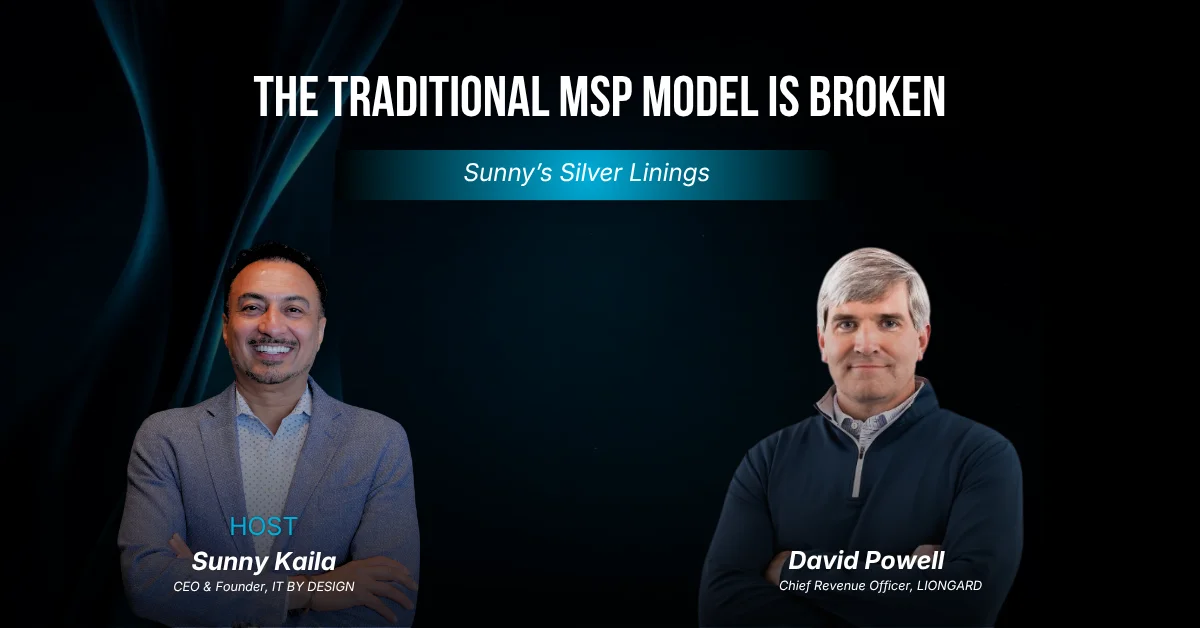
David Powell has been telling that story to salespeople for years, across 25 years in this industry that included stops at ConnectWise, Pax8, LogicMonitor, and Perch. He told it to me again on this episode, and it’s the cleanest explanation I’ve heard for what’s actually broken in how vendors sell to MSPs. We don’t sell outcomes. We sell tools. And the MSP is left standing in the hardware store holding a drill bit, still not sure what wall it’s for.
Where the Tool Sprawl Started
That gap between tool and outcome is where the tool sprawl started. David remembers when an MSP ran on three systems. A PSA, an RMM, something else. Now it’s countless tools, each one adding license cost without adding pricing power or efficiency. Margin erosion isn’t a mystery. It’s the accumulation of tools nobody asked whether they actually improved the outcome for the customer.
The Box of Legos Problem
Here’s what struck me most. David doesn’t think MSPs have a shortage of good ideas. He thinks they have a shortage of actionable ones. Go to three conferences, hear three big plays, an AI practice, a cybersecurity practice, agentic service delivery, and come home to a tech lead dealing with a dead SQL server and a resignation on the support desk. The idea isn’t the problem. The gap between idea and execution is.
David calls it dumping a box of Legos in front of someone and asking what they want to build. Most people don’t know. They need to see what a hospital, a police station, and a fire station look like built from the same pieces before they can choose.
That’s the shift right there. Vendors who show the MSP what “good” looks like, not just what the product does, are the ones who actually get adopted.
The Visibility Gap
The second half of the conversation was about visibility, and this is where Liongard’s whole model comes from. In the old MSP world, a customer environment was a house with one window and one door. On-prem, contained, easy to check. Post-2020, remote work turned that house into an apartment building with countless doors and windows nobody fully maps. A physician plugs a Linksys access point under his desk because the office Wi-Fi is weak, and now there’s an entry point nobody’s billing for, securing, or even aware of.
RMMs only tell you the state of a door today. Liongard keeps 18 months of history. David’s line was blunt: they’re the closed circuit camera, not just today’s snapshot. Knowing a door is open right now tells you nothing about who opened it, when, or why. Knowing the history tells you whether it should be open at all.
What a Robot Baking Cookies Taught Me About Bad Data
Then the conversation turned to AI, and David used his neighbors’ kids and his wife’s chocolate chip cookies to make a point most MSPs are still missing. If you want a robot to bake cookies, something has to tell it what’s actually in the pantry. AI doesn’t fix bad data. It amplifies whatever data it’s given. If an MSP’s documentation is weeks stale, AI will flag risks that aren’t real and miss the ones that are. Liongard’s pitch isn’t that they replace anything. It’s that they’re the source of truth AI automation needs to work from, built on 900 integrations.
The Recipe Nobody Wrote Down
His Aunt Evelyn’s caramel cake story landed the same point differently. She never wrote down the recipe. Nobody’s been able to reproduce it since she passed. That’s most MSPs. The knowledge lives in someone’s head, not a process.
What AI can do, if the underlying data is clean, is watch a thousand closed tickets, notice that 900 stayed closed and 100 reopened, and build the recipe from what actually worked. Not from what someone typed up after the fact.
Talking to Your Data Instead of Logging Into It
The most concrete part of the episode was David walking through what Liongard’s MCP integration actually lets an account manager do right now. Not log into Liongard. Log into Claude, connected to Liongard’s data, and ask it to compare a customer environment against NIST 800-171 and generate an HTML report in five minutes. Or ask which managed PCs aren’t upgradable to Windows 11. Or which ones are missing the latest security update but were logged into in the last seven days.
The single pane of glass MSPs have wanted for years might not be a dashboard. It might be a conversation with an AI that can pull from the PSA, the RMM, Liongard, and the accounting platform at once.
Provability
David also raised a word I hadn’t heard three years ago: provability. Cybersecurity insurers now want proof that the controls an MSP claims are deployed actually are, and when a breach happens, the finger pointing starts immediately. A historical record of what was in place and when isn’t a nice to have anymore. It’s what keeps an MSP out of the blast radius when something goes wrong.
Getting Paid for the Procedure, Not the Visit
We closed on pricing, because visibility and automation only matter if they change the business model underneath them. David’s physician analogy was sharp. A pediatrician gets paid the same whether a visit takes five minutes or ninety. A surgeon paid per procedure, roughly $10,000 per cataract surgery in his example, benefits every time they get faster. MSP billing has moved from time and material, to device-based flat fee, to seat-based, and the next move is outcome-based. Efficiency stops being something MSPs hide and starts being something that pays them more.
The 90-Day Move
David’s advice for the next 90 days was simple, not clever. Pick someone on the team, give them a dedicated day, Friday works, and let their only job be automating the most soul-crushing repeatable task in the business. Not tinkering on side projects after hours. Solving one real problem, in dedicated time, on purpose.
That’s the difference between an MSP experimenting with AI and one actually building toward being a managed intelligence provider.