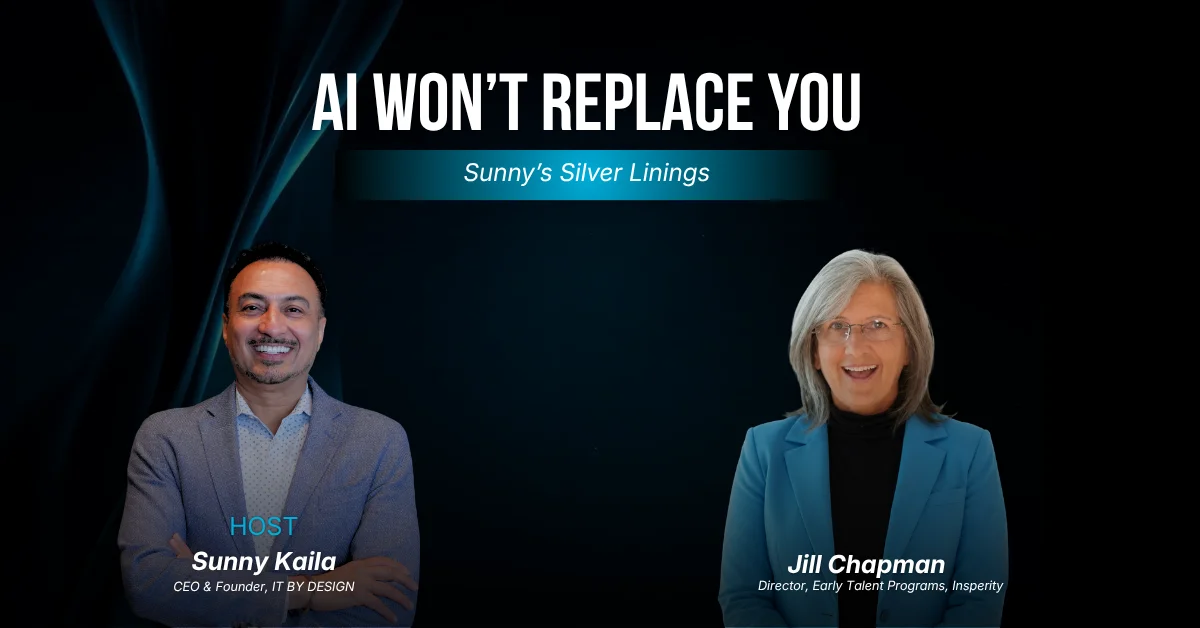
I have asked a lot of guests what the biggest mistake leaders make. Jill Chapman gave me an answer that stopped me mid-sentence: leaders treat the people side of the business like it is separate from the business strategy. Not because they do not care. Because people are harder to measure than a dashboard, so they get pushed to the back of the line until something breaks.
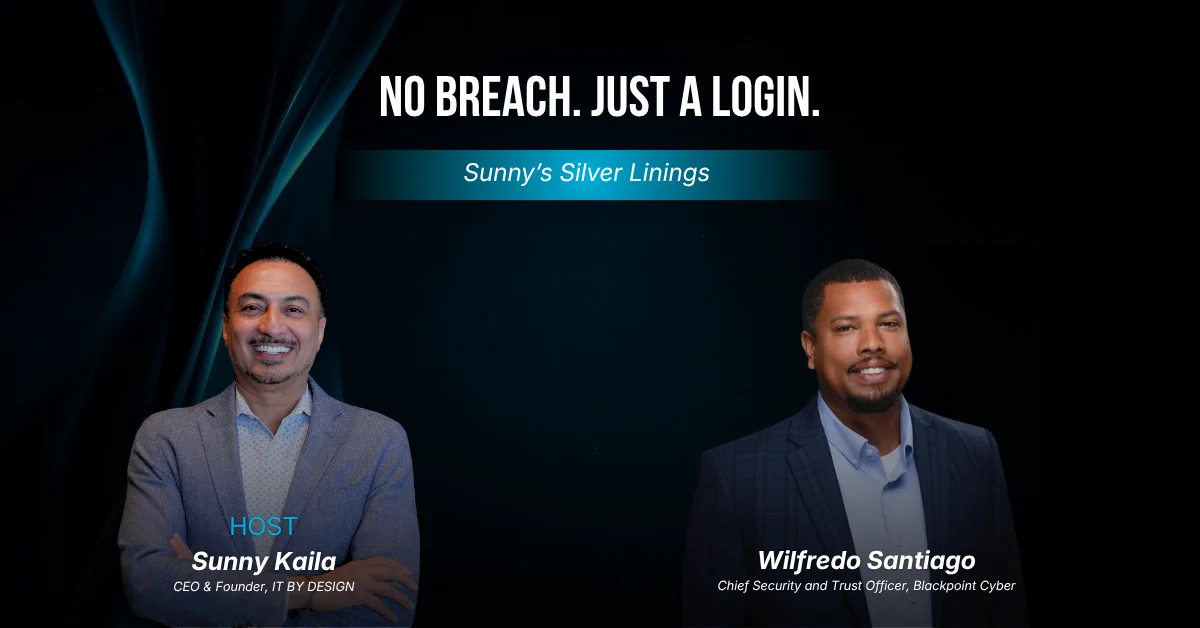
Jill has spent her career inside that problem. I sat down with her for Sunny Silver Linings, and by the end of the conversation I had more than one question I am taking back to my own business.
A Career Built Around Recruiting and Early Talent
Jill’s path started in recruiting, and she has spent most of her career in some version of that function, matching the right talent to the right role at the right time. About three years ago, Insperity stood up a new division focused on early talent, and Jill landed there, working with hiring managers to build the pipelines that bring people into the organization the right way. On top of that, she teaches HR at the university level, walking students through the full range of HR functions and what good actually looks like in practice.
The Biggest Mistake Leaders Make With Their People
Here is the mistake, in her words. Leaders build a technology roadmap with real thought given to infrastructure, scalability, and risk. Then they treat people decisions as an afterthought, moving too fast or too slow, reacting only once turnover, a performance issue, or a culture problem forces the question. Jill’s point was not that leaders are careless. People bring motivations, communication styles, and generational differences that are genuinely harder to measure than a technology input. That difficulty does not make the decision less important. It just makes ignoring it more expensive later.
Her conclusion was direct. People decisions are not soft decisions. They are growth decisions, risk decisions, and customer experience decisions. If you want to scale the business, you have to scale the human side of it at the same pace.
From Reactive to Proactive Talent Strategy
I asked Jill what a strong talent strategy looks like for a growing company, and she connected it straight back to the same idea. The strongest talent strategies are intentional before they are urgent. Too many organizations wait for an open role or a resignation, then scramble to hire the immediate pain point, and wonder months later why the same problems keep showing up.
She pushed the employee value proposition question further than I expected. It is not the polished careers page. It is the honest answer to why someone chooses you, stays with you, and does their best work for you. Compensation matters, but people are also looking for purpose, good managers, development, and trust. Jill was clear that retention problems rarely come from one bad moment. They come from a promise made during the interview that slowly stops matching the day to day experience. Her advice was to build stronger managers, create clearer career paths, hire for potential rather than a perfect resume, and actually listen to employees before they are already on their way out the door.
Why Early Talent Programs Matter More, Not Less
We talked about Insperity’s early talent programs specifically, since Jill leads that work. Her argument is that hiring for potential, not just a finished skill set, is exactly what early talent hiring is built around. She has already run into companies pulling back on early talent hiring because of AI uncertainty, and she thinks that is a mistake. Pull back too far and a company can look up in three to five years with nobody ready to step into management roles, and bringing in that experience from outside at that point is both more expensive and riskier than growing it internally. If you are protecting your culture and trying to make the right hire, growing your own talent gives you a level of predictability you do not get from an outside hire.
AI Is Not a Replacement Strategy, It Is a Redesign Strategy
This is the part of the conversation that will stick with MSP leaders the most. Jill’s framing of AI was not about what gets eliminated. It is about what work gets pulled apart and reassigned. AI can take on the repeatable, administrative, first draft kind of work. That leaves the question of what people are uniquely good at: judgment, creativity, ethical thinking, and understanding the human on the other side of whatever process is running. AI takes on more of the work. It does not take on the accountability. Leaders still have to make good decisions. Managers still have to build trust. People still have to think critically and solve problems that do not fit a script.
Jill’s hiring advice followed the same logic. Hire for adaptability and learning agility, not just technical skill or years of experience. The most valuable people in an AI-enabled workplace are the ones who use the tools well, ask better questions, and challenge the output instead of accepting it. She was direct about who struggles here too. Companies that treat AI purely as a cost cutting tool will fall behind the ones that use it to raise the ceiling on the work itself.
What Leaders and Employees Should Do Differently
I asked Jill for advice on both sides of this, leaders and employees, since fear of AI does not disappear just because a founder is excited about it. For leaders, her advice was to demonstrate responsible use of AI themselves, treat it as a collaboration tool rather than a replacement for their own judgment, and explain why the tool is being used, not just how. People move faster when they understand the reasoning behind a change.
For employees, she offered a line that is worth repeating on its own: if you treat your job like a robot, you will be replaced by a robot. AI raises the bar for the humans doing the work around it. The people who do well are not the ones worried about being replaced. They are the ones asking what they can do better, and what they can do more of, because the tool is now doing the repeatable part for them.
What to Expect at Build IT Live
Jill is joining us again at Build IT Live, and Insperity is sponsoring our night at the New York Stock Exchange this year, which is a genuinely exciting addition to the event. Her session is going to focus on the gap between policy, practice, and accountability. Most companies have the handbook and the process written down somewhere. The risk shows up in the space between what is written and what actually happens day to day, a flexible arrangement here, a system access exception there, a contractor relationship that quietly becomes mission critical without anyone deciding it should. None of those decisions get made with bad intent. They get made to keep the business moving. Over time, enough of them stack up into compliance risk, inconsistency, and trust problems inside the organization.
Three Questions to Take Back to Your Business
I closed the conversation by asking Jill for one practical action in each area we covered, and she gave me three questions worth sitting with. On the people mistake: do your daily practices actually match your policies, and are your managers equipped to make consistent decisions. On talent strategy: are you moving toward skills based hiring, looking for people who can learn and adapt rather than just perform a job description, and are you actually investing in developing the people you already have. On AI: once you decide what work AI can take on, are you investing in making your people more capable and more valuable because of it, rather than treating the shift as a cost reduction exercise.
Jill closed with a line from her CEO that is as simple as it gets. Take care of your people, and people will take care of your business.